
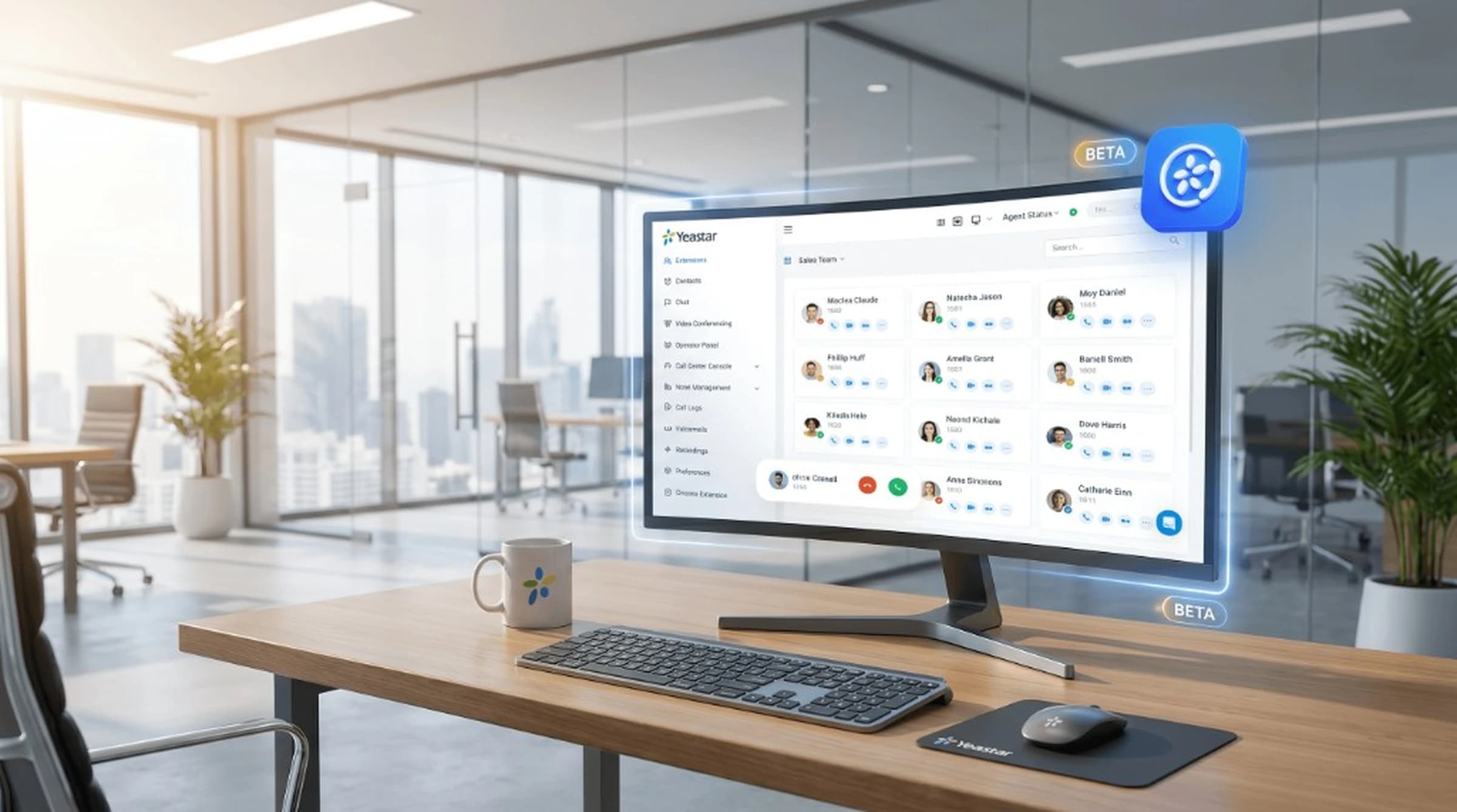
Yeastar P-Series V24.1 beta brings stronger queue visibility and call handling updates
Yeastar’s P-Series V24.1 beta gives South African businesses an early look at practical PBX improvements focused on queue accountability, Microsoft identity integration, caller experience, CRM connectivity and omnichannel support workflows.
Quick answer
Last updated 2026-04-27
- Yeastar’s P-Series V24.1 beta gives South African businesses an early look at practical PBX improvements focused on queue accountability, Microsoft identity integration, caller experience, CRM connectivity and omnichannel support workflows.
- Yeastar has released the P-Series V24.1 beta, giving partners and customers an early view of features expected to move into a future general release. For businesses already using Yeastar P-Series, the update is worth watching because it focuses less on flashy extras and more on day-to-day operational improvements: better queue visibility, cleaner identity sync, improved forwarding behaviour and stronger integration options.
- Improve accountability across reception, support and sales teams.
A practical beta release for P-Series users
Yeastar has released the P-Series V24.1 beta, giving partners and customers an early view of features expected to move into a future general release. For businesses already using Yeastar P-Series, the update is worth watching because it focuses less on flashy extras and more on day-to-day operational improvements: better queue visibility, cleaner identity sync, improved forwarding behaviour and stronger integration options.
For South African companies running reception, support, sales or service queues, those details matter. A PBX update is not only about new buttons in an admin portal. The real value is whether managers can understand what happened on calls, whether agents can follow up cleanly, and whether the phone system fits better into the wider business stack.
Better visibility for answered queue calls
One of the most useful changes in the V24.1 beta is enhanced answered queue call logs. Yeastar says queue managers and members will be able to see who handled queue calls, giving teams a more complete view across incoming, answered and missed calls.
That is a practical improvement for any business where inbound calls are shared across a team. Without clear queue history, it becomes harder to answer basic questions: Was the call picked up? Who handled it? Was it followed up? Did the customer call back because nobody owned the outcome?
- Improve accountability across reception, support and sales teams.
- Support faster callbacks on missed or unresolved calls.
- Create clearer audit trails for busy inbound environments.
- Give managers better visibility when queues are under pressure.
Microsoft AD avatar sync improves user consistency
The beta also adds support for Microsoft Active Directory user profile photo synchronisation. In plain terms, Yeastar P-Series can sync user avatars from Microsoft AD into PBX extensions, helping keep user profiles consistent across systems.
This is not mission-critical telephony, but it does make the platform feel more joined up. For companies already using Microsoft identity heavily, centralised profile management reduces small admin tasks and helps users recognise colleagues more easily inside the Linkus UC client.
Forward on Busy adds cleaner call handling
Yeastar has also updated call forwarding logic with a dedicated Send Busy destination. When a user is already occupied, incoming calls can be routed to a Hang Up destination using SIP 486 Busy Here behaviour.
For callers and carriers, that matters because the system can signal a busy condition immediately instead of leaving calls waiting unnecessarily. In real-world deployments, small call handling behaviours like this can affect customer experience, carrier routing and how cleanly edge cases are managed.
CRM and omnichannel improvements
The V24.1 beta includes several integration and customer engagement improvements. Custom CRM templates now support OAuth2 PKCE, strengthening the authentication flow for third-party CRM connections.
There are also omnichannel updates, including the ability for admins to filter and reassign sessions to other team members, including sessions linked to deleted agents or closed chats. Yeastar has also improved external chat creation logic for SMS, WhatsApp and external chat sessions, allowing new sessions to be created even where an active session already exists between the same parties.
For companies using voice together with chat channels, these changes are important because they reduce operational friction. Customer conversations often outlive individual agents, shifts or departments. Admin reassignment and better session handling make it easier to keep ownership clear.
SIP transfer and Yealink provisioning updates
Yeastar has added support for internal and external destinations in Refer-To headers, improving SIP transfer behaviour when calls are routed from third-party platforms back to P-Series PBX.
The beta also includes a Yealink IP phone auto-provisioning improvement, with support for unencrypted configuration files to help resolve certain login and setup issues. These are technical changes, but they matter to deployment teams because cleaner SIP transfer handling and smoother handset provisioning can reduce troubleshooting time during rollout or support escalations.
What this means for South African businesses
The V24.1 beta is not a reason for every business to rush beta firmware onto a production PBX. Beta releases are best tested carefully, especially in environments where phones are business-critical.
But the direction is encouraging. Yeastar is continuing to improve P-Series around the areas that matter in real deployments: queue management, Microsoft ecosystem alignment, secure CRM integration, omnichannel continuity and practical SIP behaviour.
For South African SMEs and multi-site businesses considering a PBX refresh, these updates reinforce why platform selection should include more than licence pricing. The right phone system needs to support reporting, identity, integrations, support workflows and clean operational handover.
InspireTel’s view
Our view is simple: these updates are worth tracking, especially for businesses already using Yeastar P-Series or considering Yeastar as part of a cloud PBX, hosted PBX or hybrid voice strategy.
Answered queue call logs are likely to be the standout operational feature for many teams. Microsoft AD avatar sync and CRM security improvements make the platform feel more enterprise-ready. The omnichannel and SIP handling updates point to a broader trend: business phone systems are becoming part of the customer workflow, not just a dial tone replacement.
If you are running Yeastar P-Series, test beta releases cautiously and plan any production upgrade around your call patterns, handset estate, SIP trunks and support windows.